SHU SHU SHU case study: 35 hot leads from search ads, no SMM

SHU SHU SHU is a service for manufacturing, branding and delivering goods from China for businesses and marketplace sellers. The team works directly with factories, calculates costs before launch and checks quality before shipment.
This is B2B with a long sales cycle: clients don’t buy in one click — they come with a specific request: produce a batch, add a logo, calculate delivery. So for us a lead isn’t “clicked a messenger button”, but a submitted request describing the task.
Who SHU SHU SHU is for
If you sell on marketplaces, are launching your own brand or need merch for your company, here’s what the team handles end to end:
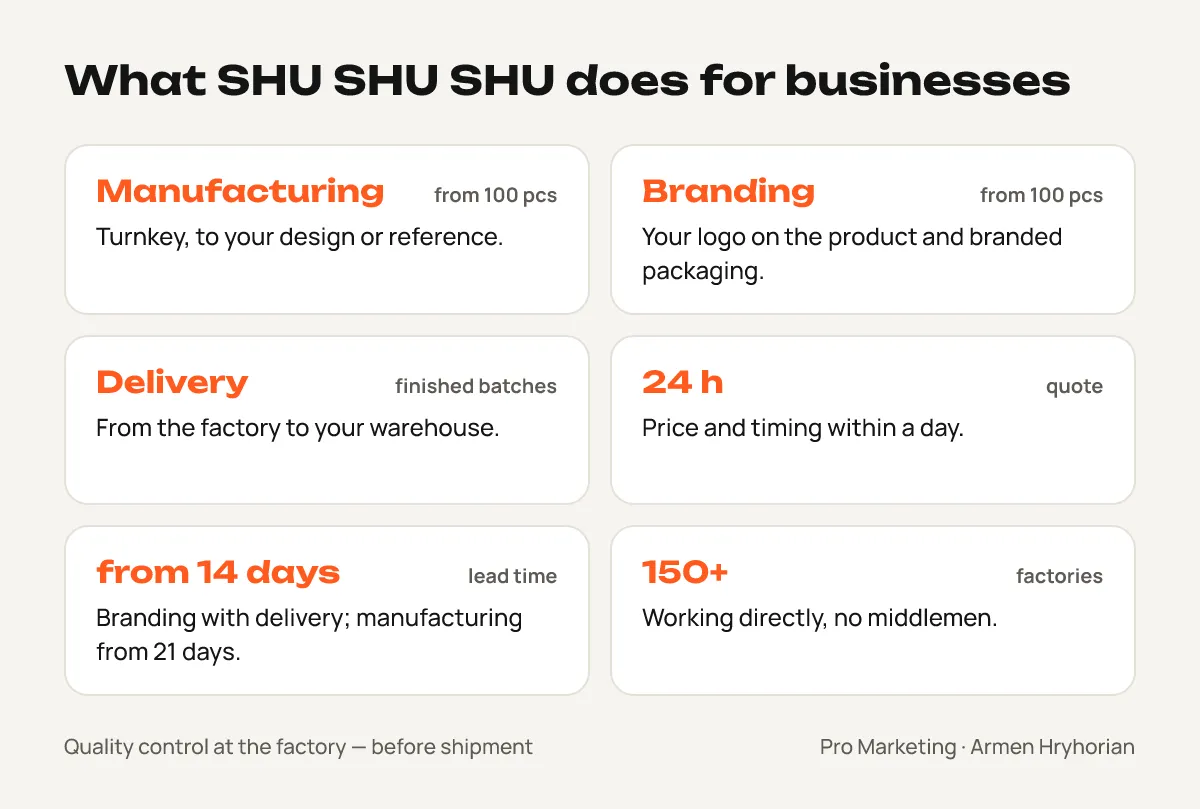
- Manufacturing to your design — from 100 pcs: materials sourcing, transparent cost calculation, on-site factory control.
- Branding — your logo on the product and branded packaging for a fast brand launch.
- Delivery of finished batches, plus individual services at fixed prices: supplier sourcing, factory audits, samples.
Real client projects: jewellery, merch, cosmetics, lingerie, tableware, branded packaging, printing and clothing production. Materials: textiles, paper, plastic, silicone, ceramics, metal, wood.
You get the price and timing within 24 hours — before you’ve paid for anything.
The starting point
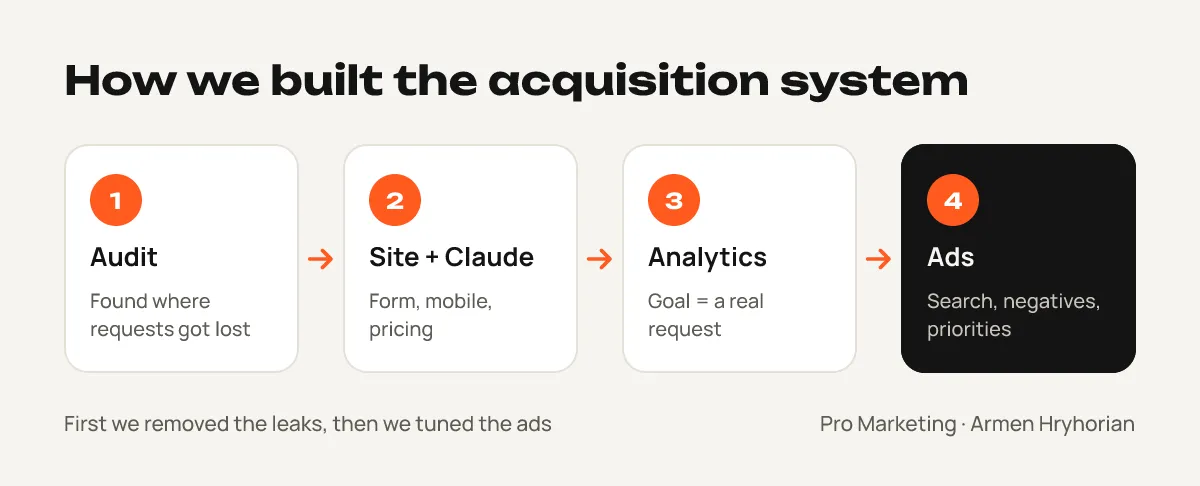
The WordPress site was already there, and so were the ads. But the numbers didn’t add up: the ad account showed conversions, while real inquiries were noticeably fewer. We started with an audit and found several problems that let money flow out while clients didn’t come in.
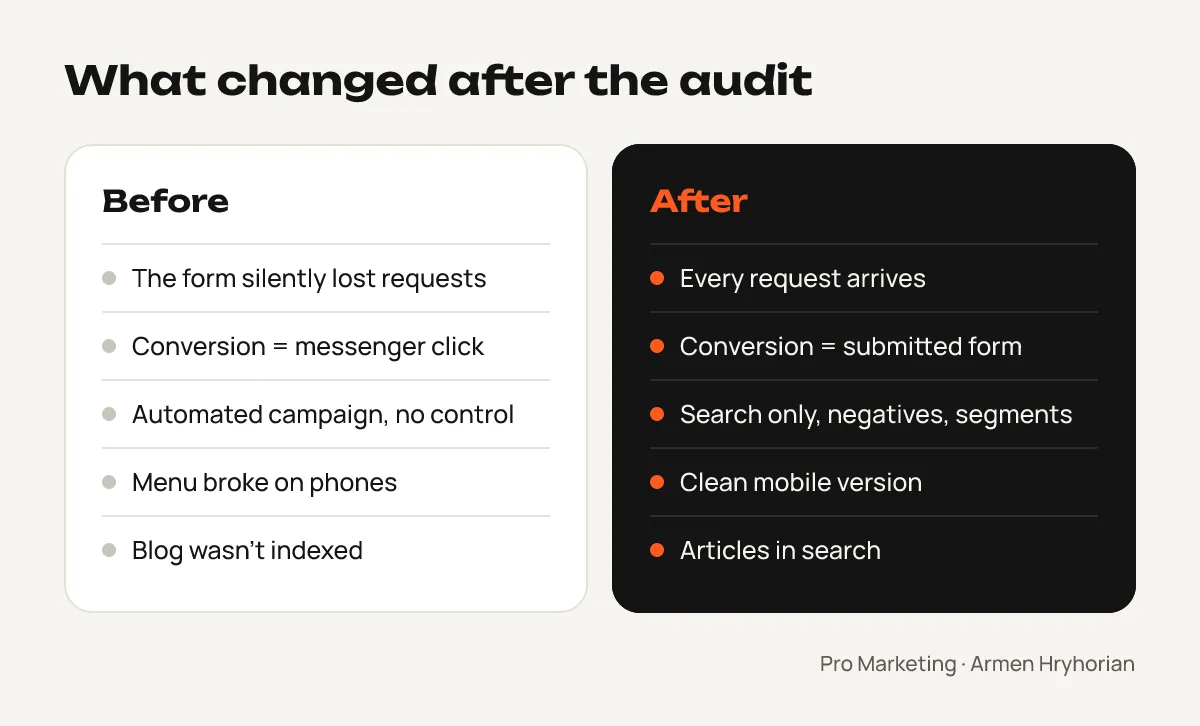
- The request form was silently broken. The form handler was crashing, and requests simply never arrived. Visitors saw that everything was sent, while the business received nothing.
- The wrong goal in analytics. Clicks on messenger buttons were counted as conversions. This inflated the results and taught the ad system to look for the wrong people.
- An automated campaign with no control. Ads were shown anywhere, and the budget was spread across irrelevant queries.
- The mobile version was breaking. On some Android devices the menu displayed as an unstyled list of links.
- The blog wasn’t being indexed because of an error in the site address settings.
What we did
1. Connected Claude to WordPress
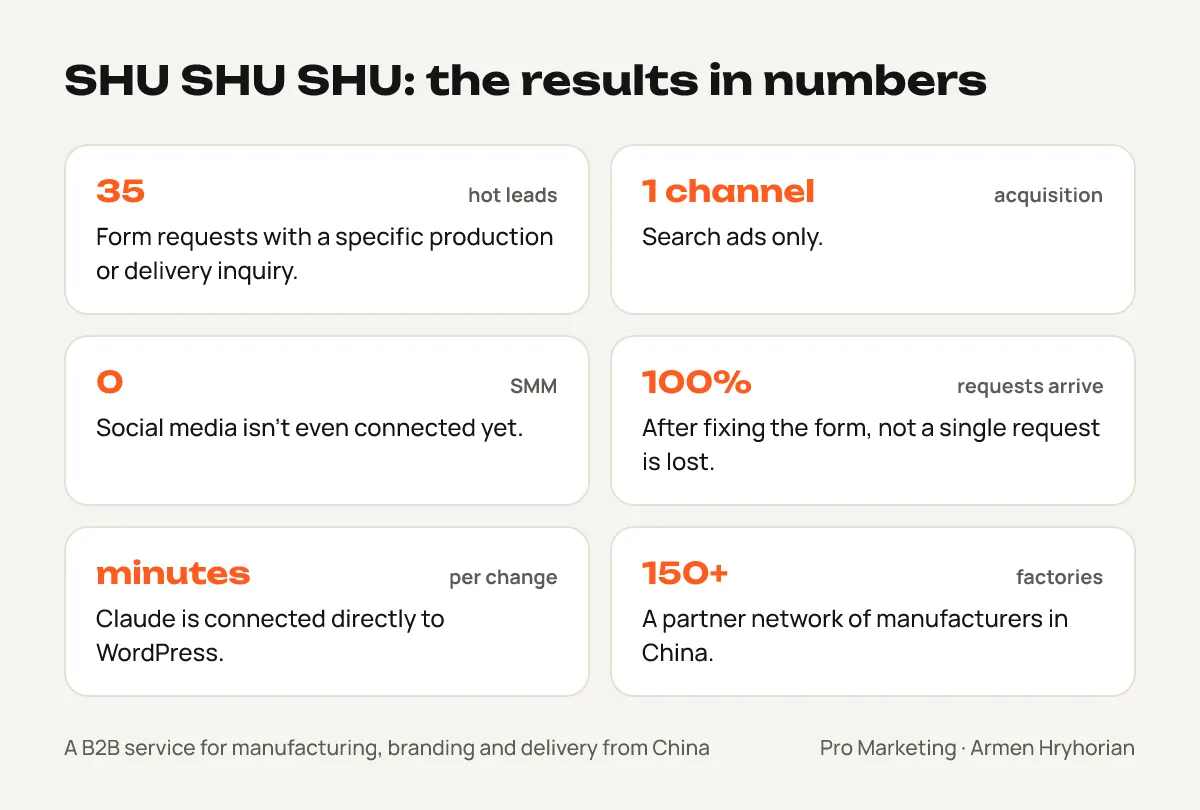
Instead of a contractor you have to wait days for, we connected the AI assistant Claude directly to the website. Now changes to pages, styles, articles and settings take minutes: you describe the task in words and get a finished result that only needs checking.
2. Fixed the path to a request
- rewrote the form handler with protective checks and made sure every request arrives;
- added a choice of messenger for the reply, so clients can continue the conversation where it suits them;
- fixed the mobile menu, block layout and button behaviour on touch screens.
3. Made the offer transparent
We created a services page with fixed prices: supplier sourcing, factory audits, samples, manufacturing to a reference and product development from scratch. For a B2B client, a clear price up front is a strong reason to submit a request. We also added a calculator and reviews to the delivery page.
4. Rebuilt the analytics
The main goal became a form submission, not messenger clicks. That way the ad system started optimising for people who actually leave a request, and we started seeing the real cost per lead.
5. Relaunched search advertising
- moved from an automated campaign to manual control with search-only placements;
- built negative keyword lists and cut off irrelevant queries;
- segmented audiences and prioritised the highest-margin areas: manufacturing and branding.
6. Launched organic growth
We fixed the sitemap and resubmitted it to search engines — and the blog articles started getting indexed. This is a second acquisition channel that reduces dependence on ads over time.
The result
35 hot leads — form requests with a specific inquiry about manufacturing, branding or delivery. All from a single channel: search advertising. We haven’t even started SMM yet.
What matters isn’t just the number, but the quality: these are people who were searching for a solution themselves, came to the site and described their task. A sales team works with requests like these very differently than with random clicks on a messenger button.
Why it worked
We didn’t start with “let’s add more budget”. We removed the places where customers were getting lost and taught the ads to find the right people.
- Audit first, scale second. If we had simply added budget, we’d have paid more for requests that still never arrived.
- The right goal. Ads optimise for whatever you show them as success. Show them real requests and you get real customers.
- Speed of change. Thanks to Claude, every hypothesis is tested in hours, not weeks.
How to start working with SHU SHU SHU
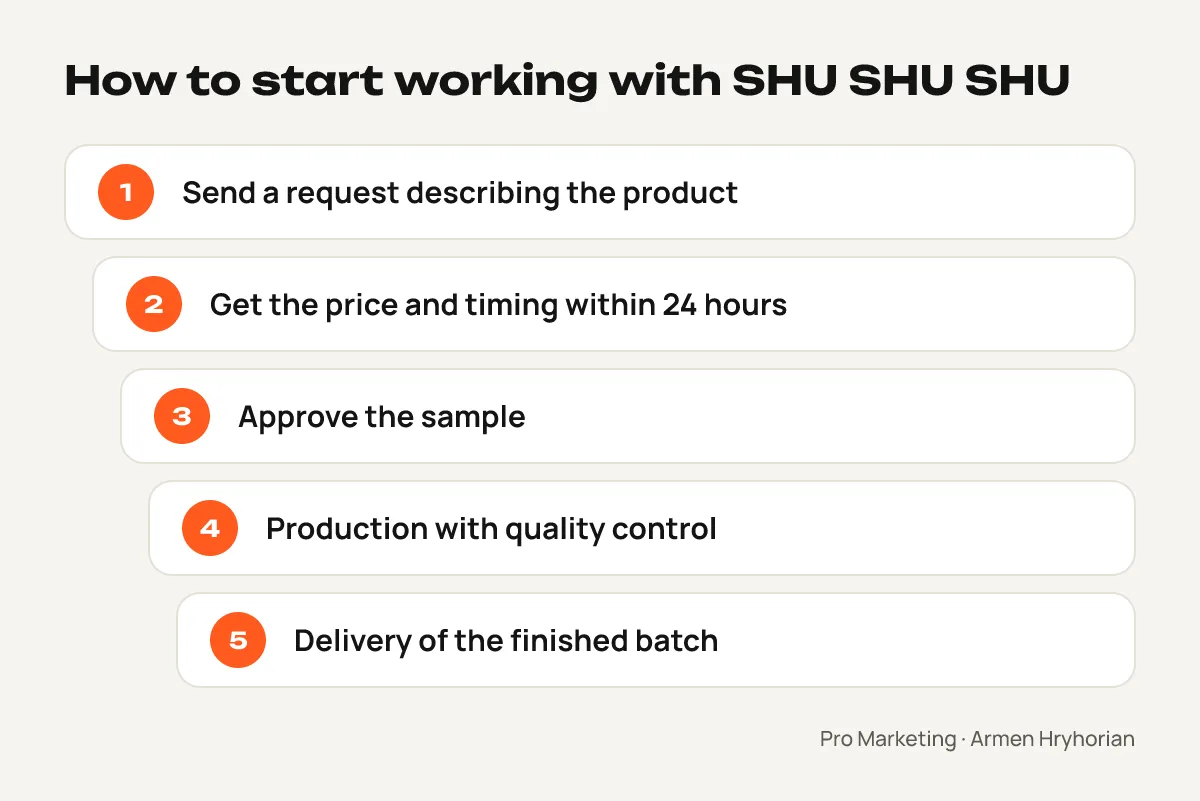
Just describe the product, the quantity and your branding wishes — a manager will get back to you within a day in the messenger you prefer. Send a request on the SHU SHU SHU website → (the site is in Russian; the team will answer your questions).
What’s next
- SMM and content to warm up the audience;
- client case studies with numbers and production photos;
- growing the blog for organic traffic.
If your ads “work” but requests are few, start with a marketing audit: most often the problem isn’t the budget, but what happens after the click. And I explain how to find the stage where you lose customers yourself in the article about the sales funnel.